
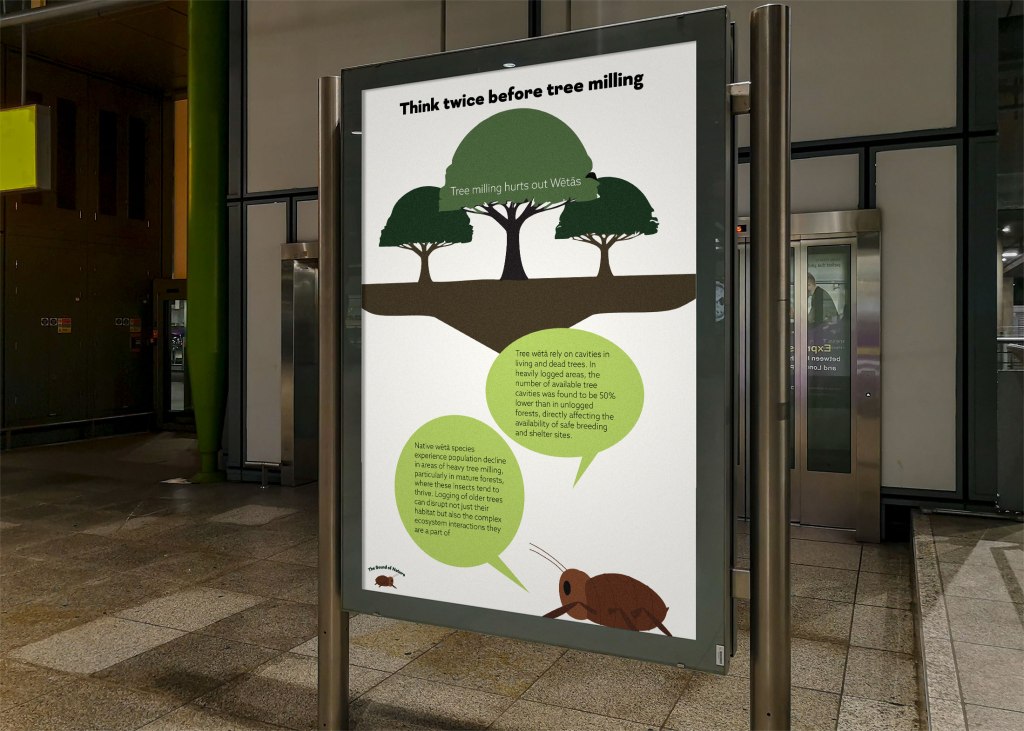
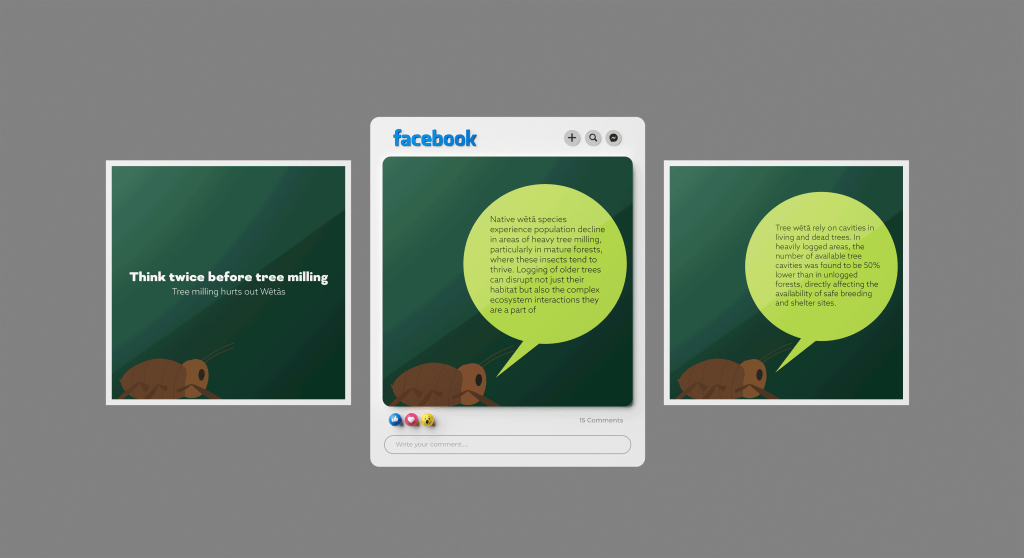
Tree milling has a profound impact on wētā populations, as it destroys essential habitats, removes crucial shelter and food sources, and exposes these insects to greater predation. Wētā, which are unique to New Zealand, are highly vulnerable to changes in their environment, and the destruction of native forest areas leaves them increasingly defenseless. The loss of tree cover also has a cascading effect on the broader ecosystem, where wētā play a vital role in decomposition and nutrient cycling, contributing to the health of soil and plant life. This disruption affects not only wētā but also other species that rely on the balanced ecosystem in native forests.
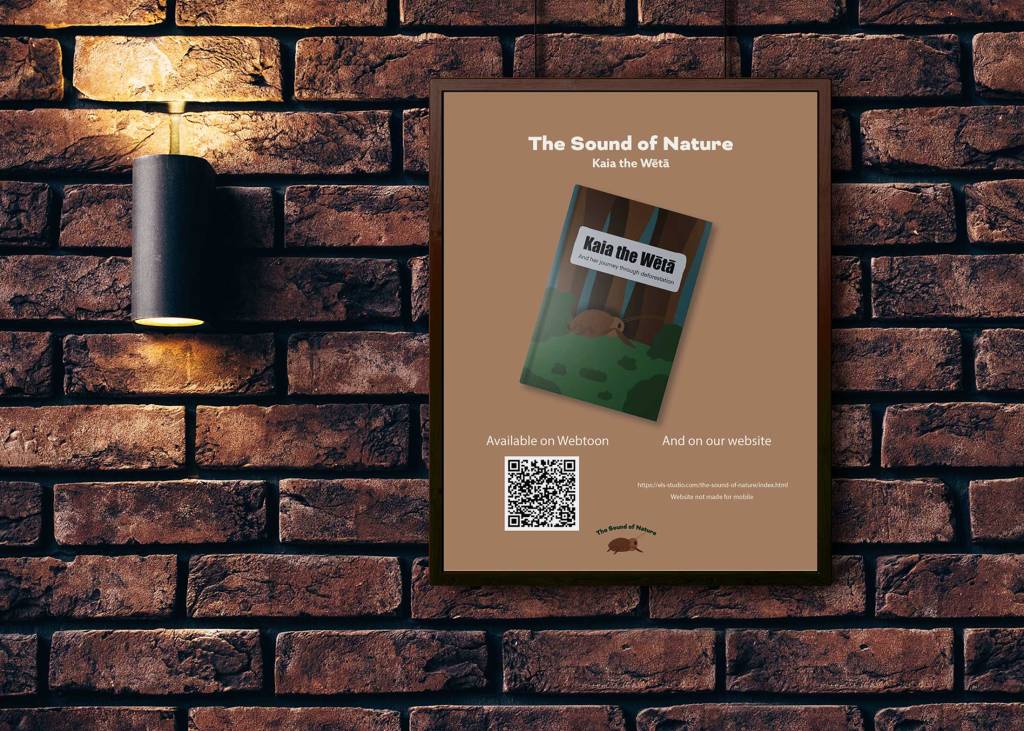
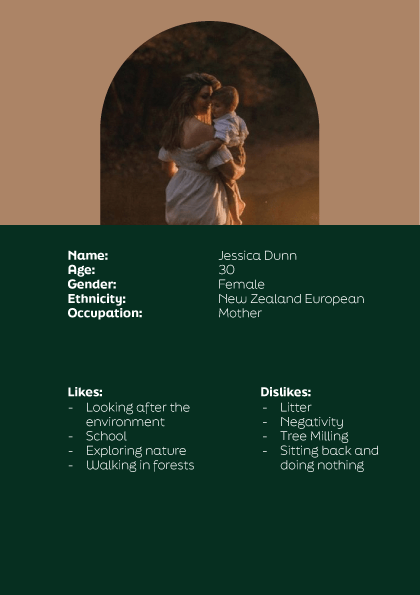
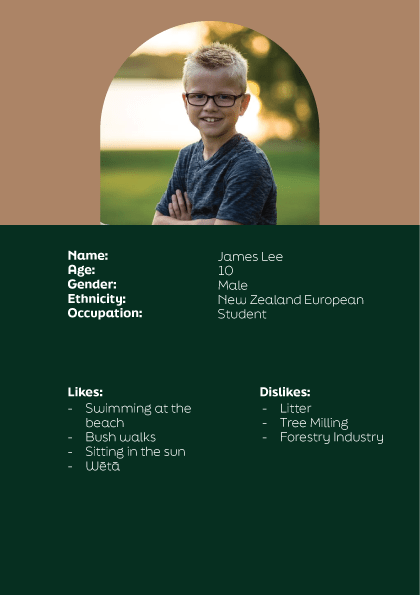
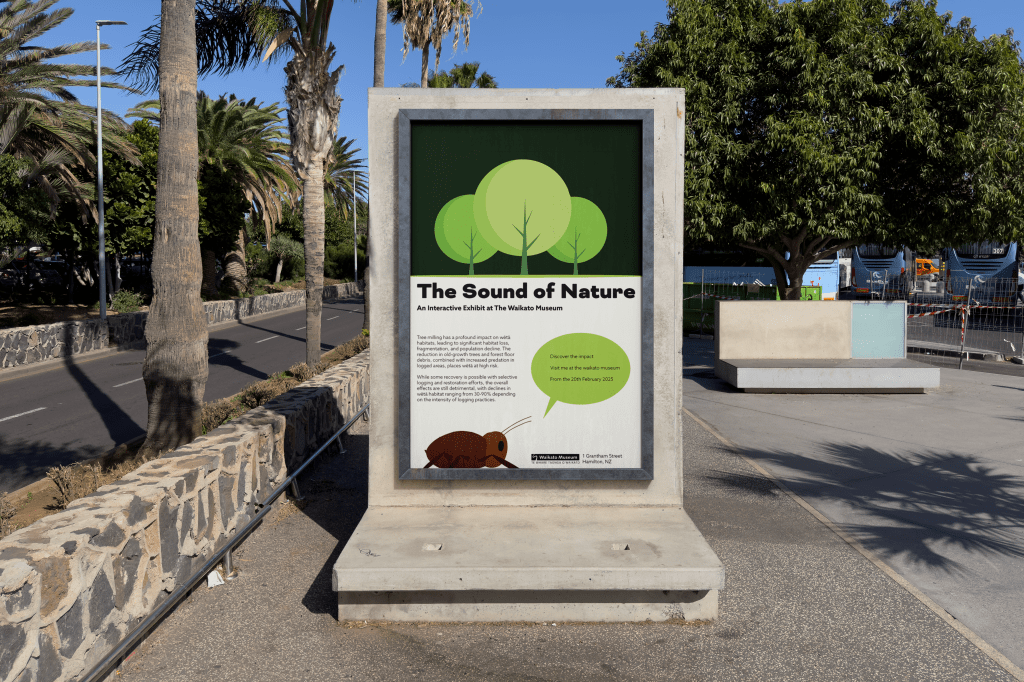
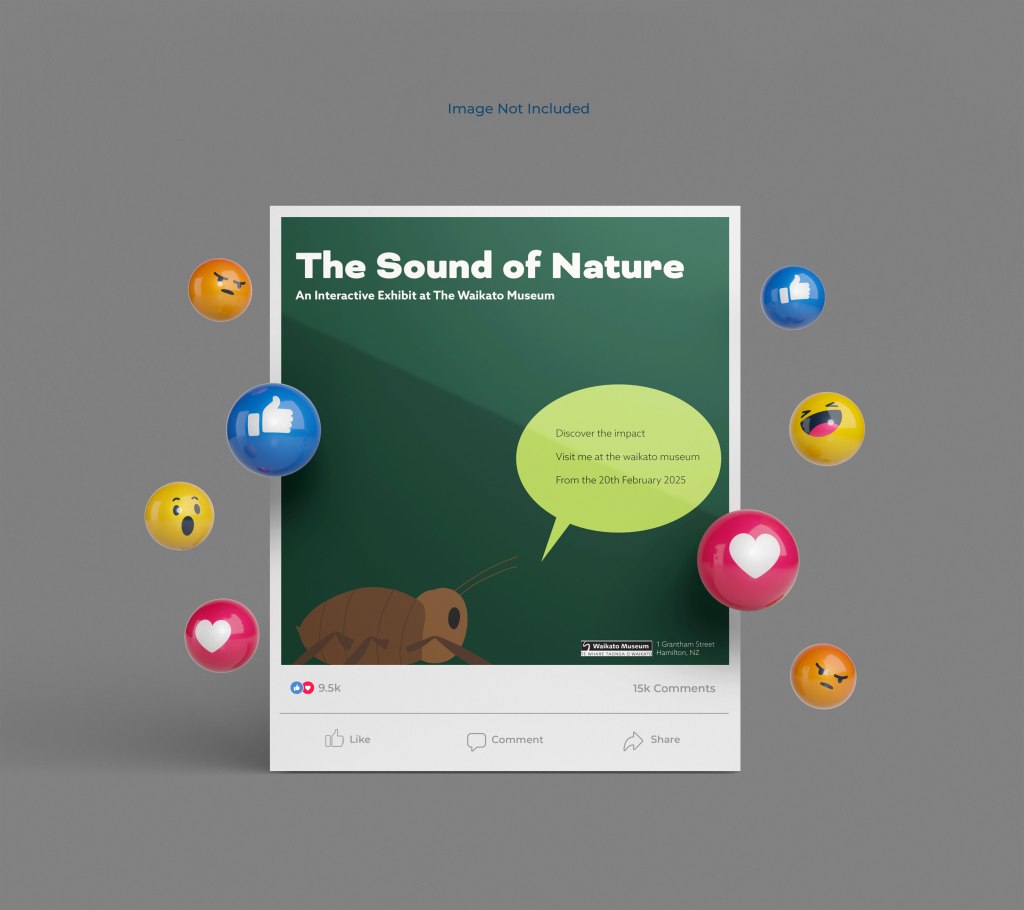
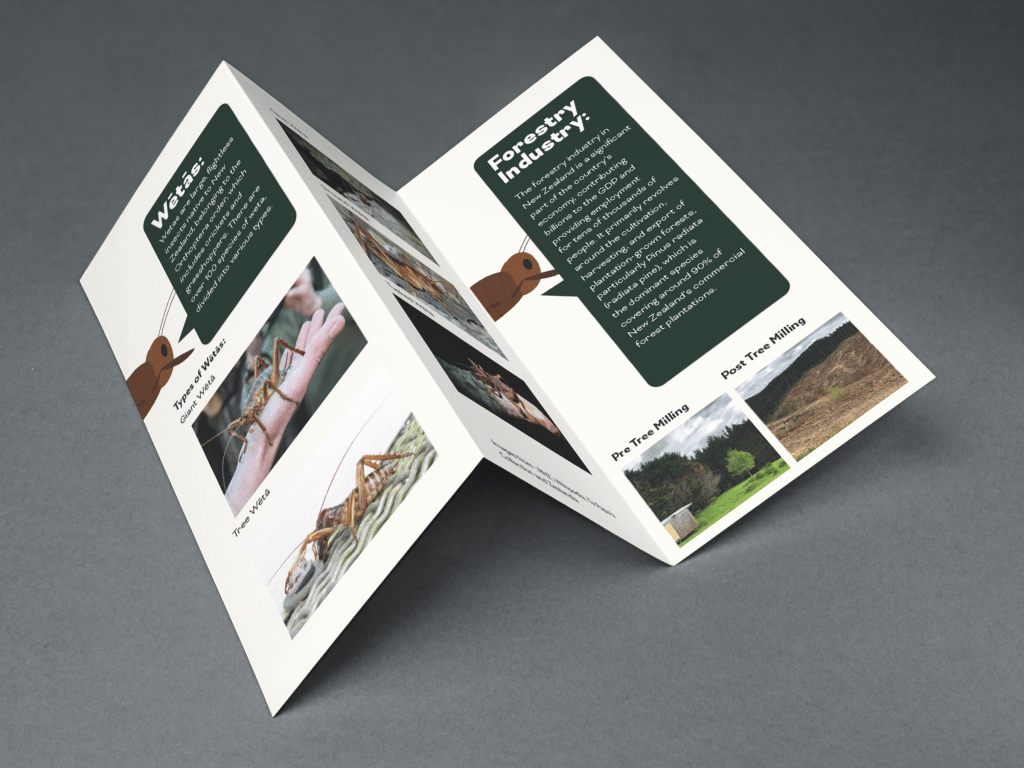
Despite the forestry industry contributing 1.6% to New Zealand’s GDP through exports, it has significant environmental costs, including pollution in waterways, soil degradation, and the decline of native arthropods like wētā. Addressing these environmental impacts, The Sound of Nature, a museum exhibit at Waikato Museum, serves as an educational platform to inform visitors about the consequences of deforestation and tree milling, specifically on wētā habitats. The exhibit is designed for New Zealanders aged 8–14, especially those who are passionate about the environment, and it incorporates interactive elements like a website, brochure handouts, and a practical section on ways to protect nature.
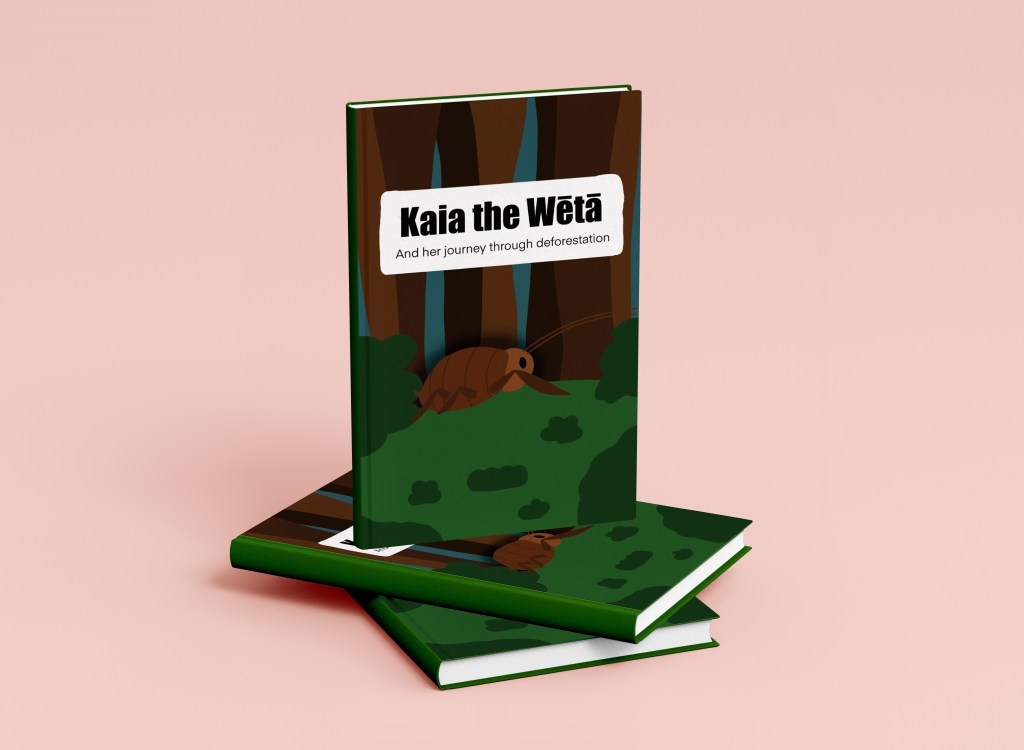
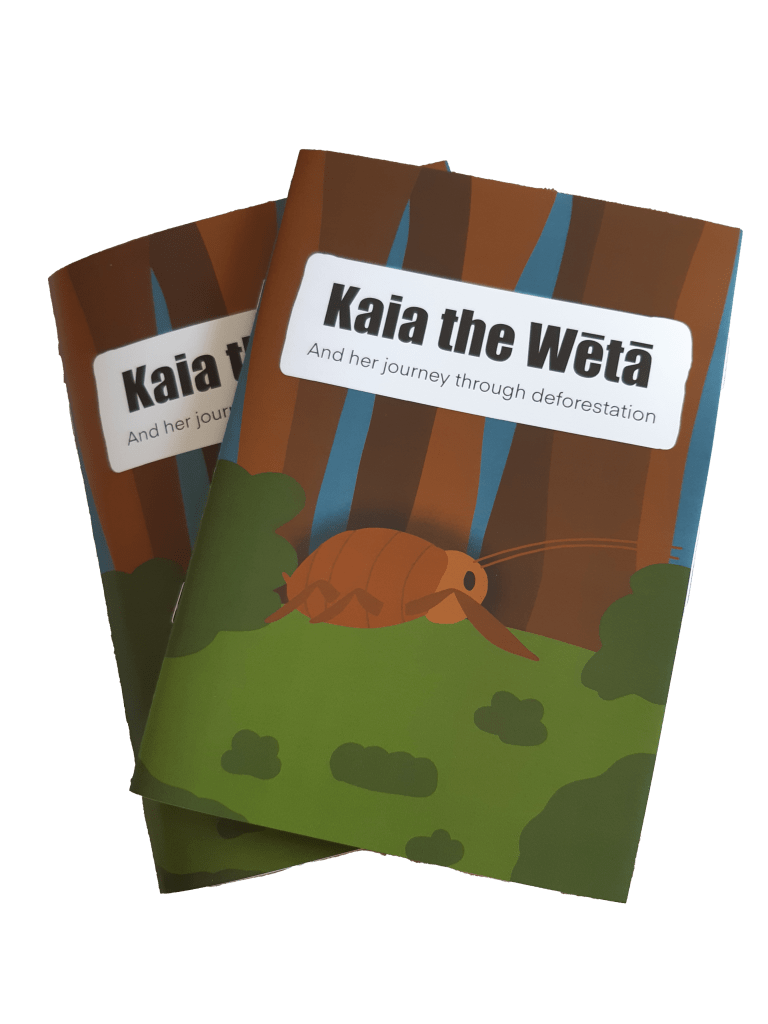
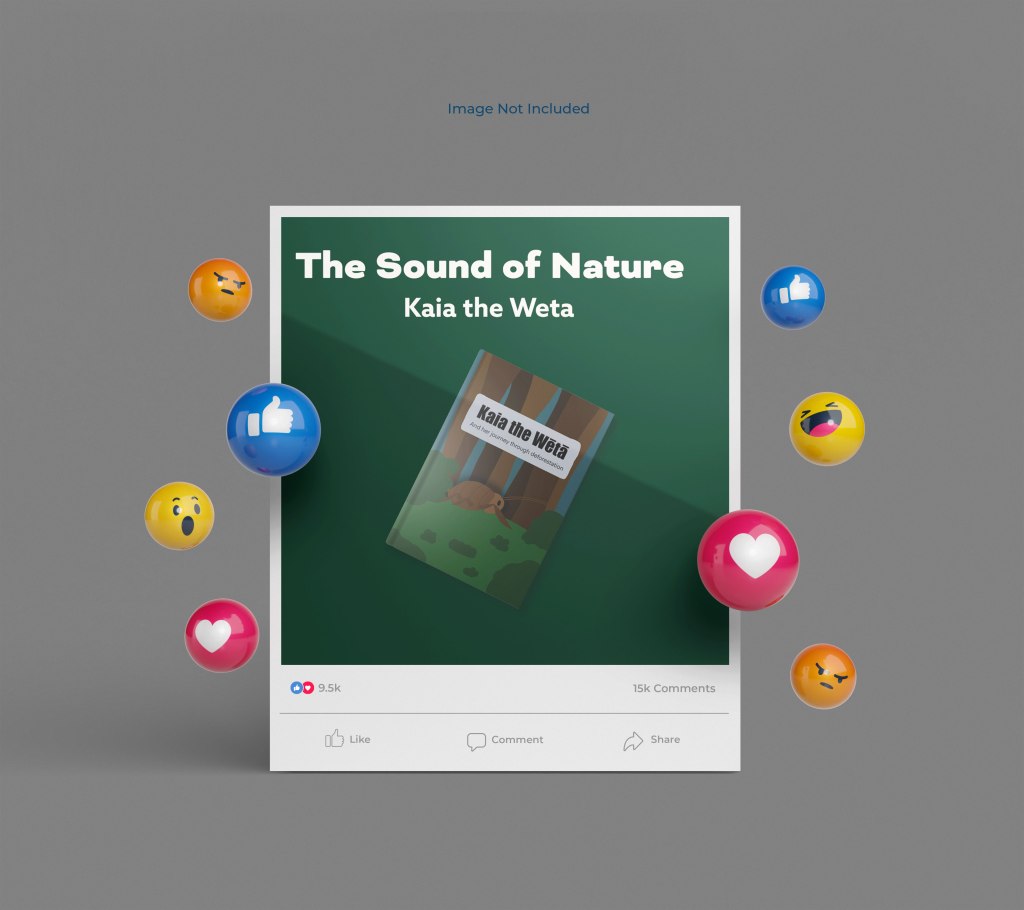
A central part of the exhibit is Kaia the Wētā, a comic book that follows the journey of a young wētā named Kaia who faces habitat loss due to tree milling. Through Kaia’s perspective, young visitors gain a personal connection to the condition of wētā and the importance of conservation efforts. This narrative element provides a storyline that resonates emotionally with the audience, making the issue accessible and engaging. Additionally, The Sound of Nature exhibit maintains a dedicated social media page to keep the public informed and involved, offering updates on conservation efforts, events, and further reading on the effects of deforestation on native species. By combining various media and storytelling approaches, the exhibit not only raises awareness but also empowers young visitors to become advocates for environmental preservation.
Through The Sound of Nature exhibit and campaign, my core message encourages people to develop a greater mindfulness of the environment and the association of ecosystems, ultimately inspiring positive environmental change. By educating young New Zealanders about the significant impacts of tree milling and deforestation, especially on vulnerable native species like the wētā, the exhibit seeks to build a foundation of awareness and respect for our natural surroundings.
Through interactive elements, storytelling, and practical resources, The Sound of Nature not only highlights the challenges facing native species but also offers accessible ways for people to make a difference, whether through everyday actions or community involvement. By creating a connection to Kaia, the wētā character, and showcasing distinct conservation methods, the exhibit provides a lasting impact on visitors, instilling a sense of responsibility to protect these delicate habitats. With this campaign, I aim to nurture an understanding that even small changes can collectively lead to substantial environmental benefits, fostering a culture of trust that will inspire individuals to actively participate in preserving New Zealand’s unique ecosystems for generations to come.




 Els Studio